



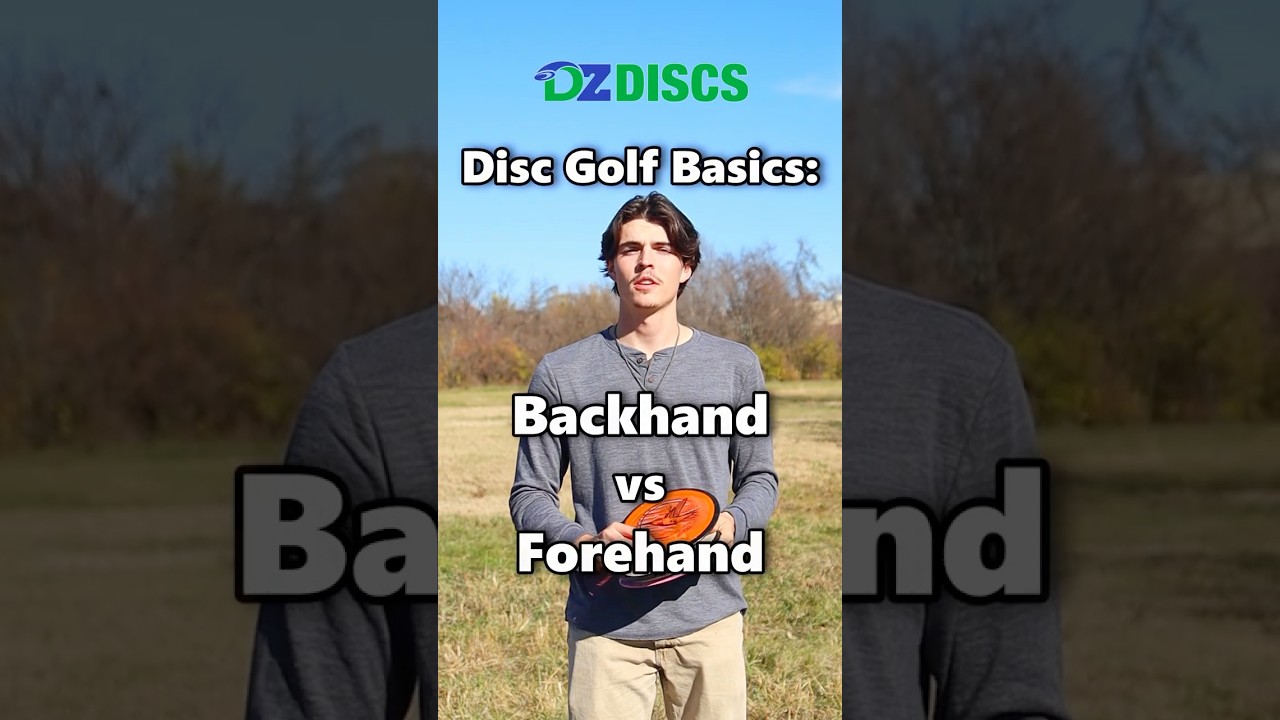
If you're new to disc golf, understanding the two main throwing styles—backhand and forehand—will help you throw more confidently and shape better lines on the course.
Backhand Throws
The backhand is the classic disc golf throw and the one most players learn first. It involves pulling the disc across the front of your body—from the side opposite your throwing hand— and releasing it with a smooth wrist flick and full-body rotation.
- Right-handed players: a backhand shot naturally fades left at the end of its flight.
- Left-handed players: it naturally fades right.
Common Backhand Grips
Power Grip
Great for maximum distance. Curl all your fingers tightly under the rim while keeping your thumb firmly planted on top. This grip provides strong spin and power, but can be harder to control for touch shots.
Fan Grip
Ideal for approach shots and mid-range throws. Spread your fingers along the underside of the disc for better angle control and a cleaner release. This grip trades a bit of power for much more accuracy.
Forehand Throws
A forehand throw—often called a sidearm or flick—is thrown on the same side as your throwing arm. The motion is similar to skipping a stone across water and is great for shaping lines that bend the opposite direction of a backhand.
- Right-handed players: forehands will naturally fade to the right.
- Left-handed players: they will fade to the left.
Common Forehand Grips
Forehand Power Grip
Place your middle finger firmly against the inside rim, with your index finger curled behind it. This creates strong pressure into the rim for power and spin.
Stacked Grip
Similar to the power grip, but instead of curling the index finger underneath, you stack it on top of the middle finger. Both fingers still apply pressure toward the inside rim. This grip can feel more comfortable for some players and can help with a smoother release.
In both grips, your thumb should press firmly on top of the disc for control.
Why Learn Both?
Most players naturally gravitate toward one style—but mastering both backhand and forehand throws gives you far more versatility on the course. You’ll be able to navigate obstacles, shape different flight paths, and handle wind more effectively.
Keep practicing, stay patient with the learning curve, and you’ll see your game level up quickly. For a visual breakdown, check out the full video above!


Laissez un commentaire